Best AI Voices for Advertising
Discover the best AI voices for advertising and learn how to choose the right tone, accent, and delivery style for commercials, social media ads, and brand campaigns.
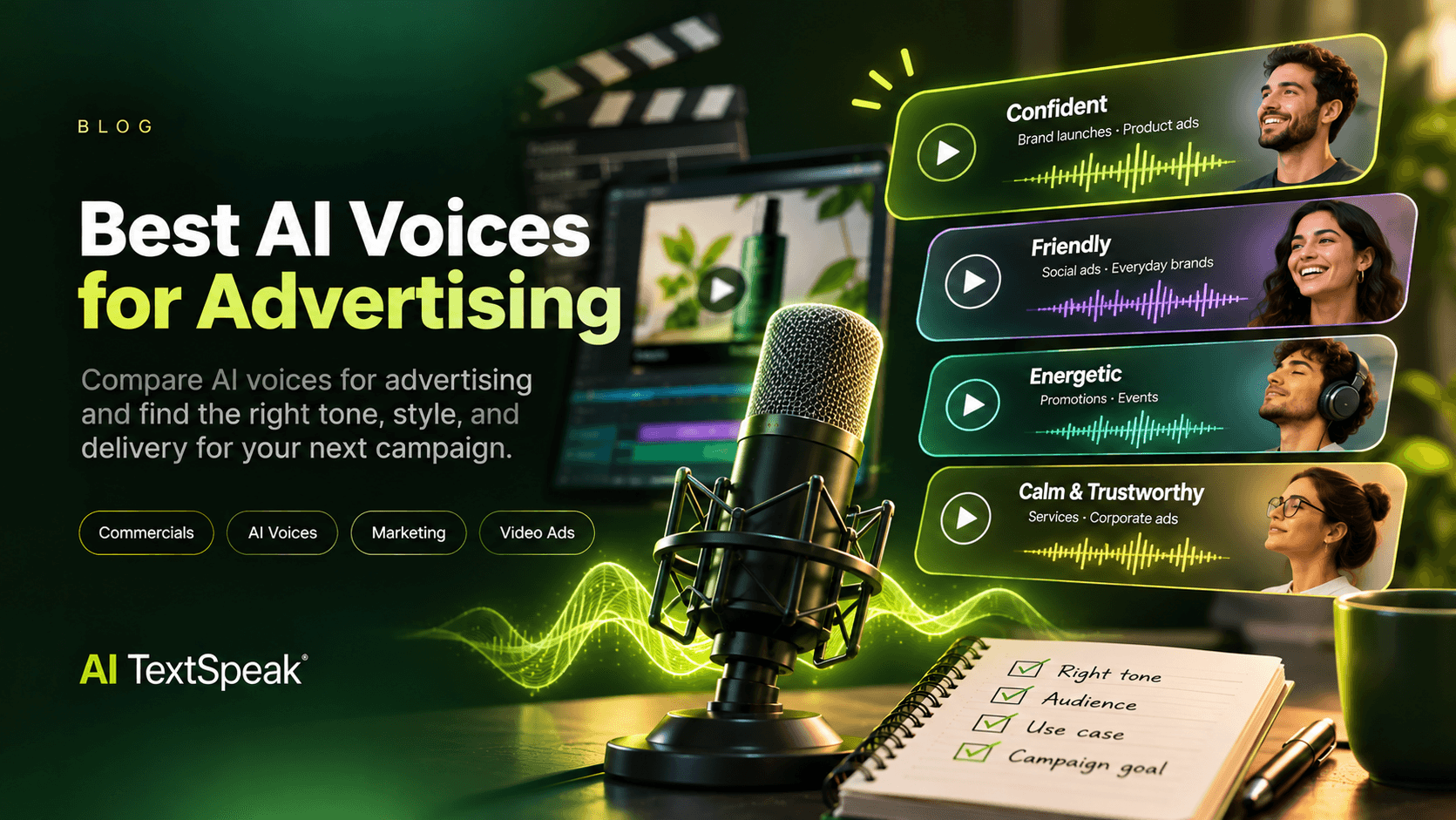
The voice behind an advertisement can influence how people perceive a brand, connect with a message, and respond to a campaign. A confident voice may make a product announcement feel authoritative, while a friendly and conversational delivery can make a social media ad feel more relatable.
With AI text-to-speech technology, marketers and advertising agencies can explore different voice styles without relying exclusively on traditional recording sessions. But with so many possible tones, accents, and delivery styles, how do you find the best AI voice for advertising?
The answer depends on your audience, brand personality, campaign objective, and advertising format. This guide explores the most useful AI voice styles for advertising, explains how to compare them, and provides practical tips for choosing the right voice for your next campaign.
What Makes an AI Voice Good for Advertising?
A good advertising voice does more than pronounce words correctly. It communicates the intended personality of a brand and makes the commercial message easy to understand.
When evaluating an AI voice for advertising, consider these characteristics:
- Clarity: The message should be easy to understand, even when listeners are distracted or hearing it for the first time.
- Natural delivery: The narration should sound comfortable rather than mechanical or overly rehearsed.
- Appropriate tone: The voice should match the product, audience, and brand personality.
- Consistent pronunciation: Brand names, product names, and important terminology should be pronounced correctly.
- Suitable pacing: The delivery should give listeners enough time to understand the message.
- Audience relevance: The voice should feel appropriate for the people the campaign is trying to reach.
There is no single voice that works for every advertisement. A voice that performs well in a technology commercial may not be the best choice for a lifestyle brand or a promotional video.
Best AI Voice Styles for Advertising
Instead of looking for one universally superior voice, start by identifying the delivery style that best supports your campaign.
1. Confident and Professional Voices
A confident, professional voice communicates authority and clarity. It can help brands present information in a direct and credible way, especially when the audience needs to understand a product or service quickly.
Best suited for:
- B2B advertising.
- Financial and professional services.
- Software and technology products.
- Corporate brand videos.
- Product demonstrations and explainers.
Example delivery: Clear articulation, measured pacing, and emphasis on the product's main benefits.
What to avoid: A delivery that sounds too formal or distant for the intended audience.
2. Friendly and Conversational Voices
Friendly voices create a more approachable listening experience. They can make advertisements feel like natural recommendations rather than traditional sales pitches.
Best suited for:
- Social media advertising.
- Consumer products.
- Lifestyle and wellness brands.
- Everyday services.
- Short promotional videos.
Example delivery: Warm, relaxed, and conversational, with natural pauses and an inviting tone.
What to avoid: Excessive informality when the brand needs to communicate expertise or trust.
3. Energetic and Upbeat Voices
Energetic narration can help create momentum and capture attention. It is particularly useful when the advertisement needs to communicate excitement, urgency, or enthusiasm.
Best suited for:
- Events and entertainment promotions.
- Retail campaigns and seasonal offers.
- Product launches.
- Sports and fitness advertising.
- Short promotional campaigns.
Example delivery: Brighter intonation, dynamic pacing, and emphasis on important promotional details.
What to avoid: An overly fast or exaggerated delivery that makes the message difficult to follow.
4. Calm and Reassuring Voices
Some advertisements benefit from a voice that communicates reassurance rather than excitement. A calm delivery can help audiences process information and feel more comfortable with a product or service.
Best suited for:
- Educational services.
- Customer support products.
- Home and personal services.
- Wellness and lifestyle campaigns.
- Informational brand videos.
Example delivery: Steady pacing, clear pronunciation, and a warm but controlled tone.
What to avoid: A delivery that is so restrained that the advertisement loses its sense of purpose.
5. Storytelling and Expressive Voices
Some campaigns need to communicate a feeling or create a memorable narrative. Expressive narration can help support storytelling, particularly when the visuals and script are designed to create an emotional connection.
Best suited for:
- Brand storytelling videos.
- Product lifestyle campaigns.
- Travel and hospitality advertising.
- Emotional promotional videos.
- Creative brand campaigns.
Example delivery: Varied pacing, thoughtful emphasis, and a tone that follows the progression of the story.
What to avoid: Overly dramatic narration that competes with the visuals or makes the message feel artificial.
AI Voice Comparison: Which Style Fits Your Campaign?
Use this comparison as a starting point when deciding which voice direction to test.
| Voice style | Typical advertising use | Main strength | Potential drawback |
|---|---|---|---|
| Confident | Corporate and technology ads | Authority and clarity | May sound too formal |
| Friendly | Social and consumer ads | Approachability | May lack authority for some messages |
| Energetic | Promotions and launches | Attention and momentum | Can become overwhelming |
| Calm | Informational and service ads | Reassurance and readability | May lack excitement |
| Expressive | Storytelling campaigns | Emotional atmosphere | May distract from the message |
The ideal choice is the voice that communicates your message effectively, not necessarily the one that sounds the most impressive in isolation.
How to Choose the Right AI Voice for Your Advertisement
1. Start With Your Target Audience
Think about who will hear the advertisement. Different audiences may respond to different communication styles, and the voice should reflect the context in which the ad appears.
Consider the audience's familiarity with your product, their expectations, and the language they use. A highly technical audience may appreciate direct and precise narration, while a consumer campaign may benefit from a more conversational approach.
2. Match the Voice to Your Brand Personality
Your advertising voice should feel consistent with the rest of your brand communication.
- A premium brand may prefer an understated and polished delivery.
- A playful brand may use a warmer, more energetic style.
- A professional service may benefit from confident and measured narration.
- A community-focused brand may prefer a friendly and approachable voice.
Consistency matters. If your website, social media, and advertisements communicate completely different personalities, the overall brand experience may feel disconnected.
3. Consider the Advertising Format
The best voice for a 15-second social media advertisement may not be the best choice for a longer product video.
Consider the format before selecting a voice:
- Short-form video ads: Prioritize clarity, an engaging opening, and concise delivery.
- YouTube commercials: Choose a voice that can maintain attention and communicate the message within the available time.
- Product explainers: Focus on understandable pronunciation and a consistent pace.
- Brand videos: Consider a voice that complements the storytelling and visual identity.
- Retail promotions: Select a delivery that makes offers, product details, and calls to action easy to understand.
4. Choose the Right Language and Accent
If your campaign targets multiple markets, language and accent become important selection criteria.
Consider whether your audience expects a particular regional accent, whether technical or brand-specific words are pronounced correctly, and whether the voice sounds natural in the target language.
Do not choose an accent simply because it sounds familiar or popular. Choose one that makes sense for the audience and market you are trying to reach.
5. Test the Voice With Your Actual Advertising Script
A voice sample can sound excellent in a demonstration but perform differently with your script. The wording, punctuation, brand names, and sentence structure all influence the final result.
Use a short section of your actual advertisement to evaluate:
- Pronunciation of brand and product names.
- Clarity of the main selling point.
- Natural pauses and sentence transitions.
- Emphasis on the call to action.
- Overall suitability for your campaign.
Compare two or three suitable voice options using exactly the same text. This makes your evaluation more consistent.
Should You Use a Male or Female AI Voice for Advertising?
There is no universal rule that male or female voices perform better in advertisements. The most appropriate choice depends on the campaign concept, brand identity, audience, and available voice options.
Rather than making assumptions based on gender, compare the actual characteristics of each voice:
- Pitch and vocal texture.
- Pronunciation and clarity.
- Warmth and perceived energy.
- Natural pacing.
- Compatibility with the script and visuals.
Test multiple voices and select the one that supports the message most effectively. The quality of the delivery matters more than relying on stereotypes about which voice belongs to a particular industry.
AI Voices for Advertising vs. Human Voice Actors
AI-generated narration and professional voice acting offer different creative possibilities. AI voices can support flexible production and experimentation, while human performers can bring interpretation and nuanced acting to a campaign.
| Factor | AI voices | Human voice actors |
|---|---|---|
| Voice selection | Choose from the voices available in the tool. | Select a performer based on auditions and creative requirements. |
| Creative delivery | Depends on the voice model and available settings. | Can offer nuanced interpretation and directed performances. |
| Revisions | Individual passages may be regenerated. | Changes may require additional recording. |
| Production workflow | Can support text-to-speech generation and testing. | Usually involves recording, direction, and post-production. |
| Best fit | Campaigns that benefit from flexible synthetic narration. | Campaigns that require distinctive acting or a specific performance. |
Neither option is automatically right for every campaign. The decision should reflect your creative goals, production needs, budget, and licensing requirements.
How to Test AI Voices Before Launching an Advertising Campaign
Before committing to a voice, create a simple comparison process. This helps marketing teams evaluate options based on campaign requirements instead of personal preference alone.
- Prepare one script: Write a representative version of your advertisement.
- Select different voice styles: Include options that reflect your brand's intended personality.
- Generate comparable samples: Use the same text for each voice.
- Review the delivery: Check pronunciation, tone, pacing, and clarity.
- Compare campaign fit: Consider how each voice works with your visuals, music, and audience.
- Check permissions: Verify the commercial-use license and any applicable advertising requirements.
It can also be useful to ask other members of your marketing team to review the samples. A voice that sounds appealing to the person creating the advertisement may not communicate the same message to the intended audience.
Common Mistakes When Choosing an AI Advertising Voice
- Choosing a voice based only on personal preference: The voice should fit the campaign and its audience, not just the creator's taste.
- Ignoring the script: A voice needs to work with the actual wording, including brand names and technical terms.
- Prioritizing energy over clarity: An exciting delivery is not useful if listeners cannot understand the message.
- Ignoring brand consistency: The advertising voice should complement the brand's wider communication style.
- Skipping audio review: Always listen to the generated narration before publishing.
- Assuming every voice can be used commercially: Review the current license and permissions associated with the tool and voice.
Find the Right AI Voice for Your Next Advertising Campaign
The best AI voice for advertising is the one that helps your audience understand your message and connects naturally with your brand. Whether you need a confident commercial voice, a friendly social media narrator, or an energetic promotional style, the selection process should always begin with your campaign objective.
AI TextSpeak lets you explore AI text-to-speech voices by testing your own written content as generated speech. Try a short advertising script, compare the available voices, and listen to how each option fits your campaign.
Explore AI TextSpeak commercial voiceovers and find a voice direction for your next advertisement.
Frequently Asked Questions
What is the best AI voice for advertising?
There is no single best voice for every campaign. Confident voices may suit professional services, friendly voices may work well for consumer brands, and energetic voices may support promotional campaigns. The best choice depends on the audience and advertising objective.
Are AI voices good for commercial advertisements?
AI voices can be suitable for many advertising formats, including product videos, social media promotions, and explainers. The result should be reviewed for quality and checked against the relevant commercial-use license and platform requirements.
Should I use a male or female AI voice for my advertisement?
Choose based on the characteristics of the voice and its fit with your campaign. Consider tone, pitch, pronunciation, pacing, and audience expectations rather than assuming one gender performs better.
How do I make an AI advertising voice sound natural?
Write conversational scripts, use clear punctuation, test brand names, and compare available voices using the same passage. Review the generated audio and adjust the text or available settings when needed.
Can I use AI voices for social media ads?
Yes, AI-generated narration can be used for suitable social media advertising projects, provided the tool's license and the platform's current requirements allow the intended use.
Can AI voices replace professional advertising voice actors?
AI voices can support some advertising workflows, but they do not replace every aspect of human performance. Campaigns that require nuanced acting, distinctive interpretation, or a specific performer may still benefit from professional voice actors.
Final Thoughts
Choosing the right AI voice is an important part of creating an effective advertisement. Start with your audience and brand personality, identify the delivery style that supports your message, and test available voices with your actual script.
With the right combination of voice, writing, and audio review, AI text-to-speech can become a useful part of your advertising production workflow.
Try AI TextSpeak for your next commercial voiceover and explore the available AI voice options.